BUTEXCOMP Prepares Roadmap for Increasing the Use of Composites and Technical Textiles for Earthquake Resistant Structures

BUTEXCOMP Project, one of Turkey's most important technological transformation projects carried out by BTSO, carried out an important program to increase the use of composite materials and technical textiles in the construction of new earthquake-resistant buildings and retrofitting of existing buildings. A road map and action plan will be prepared with the outputs obtained at the 2-day Search Meeting in Istanbul.

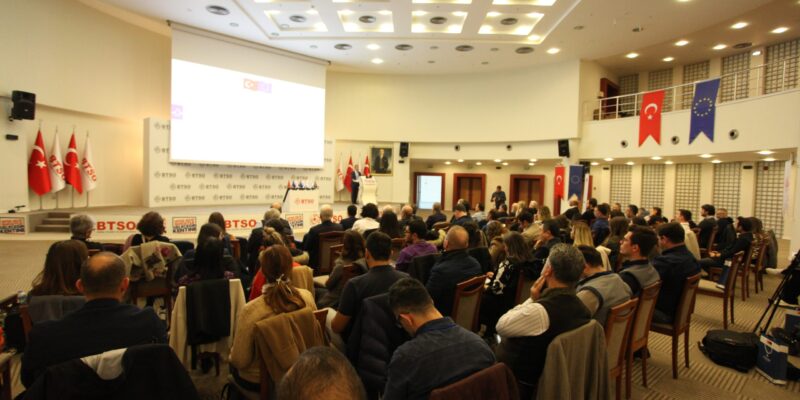
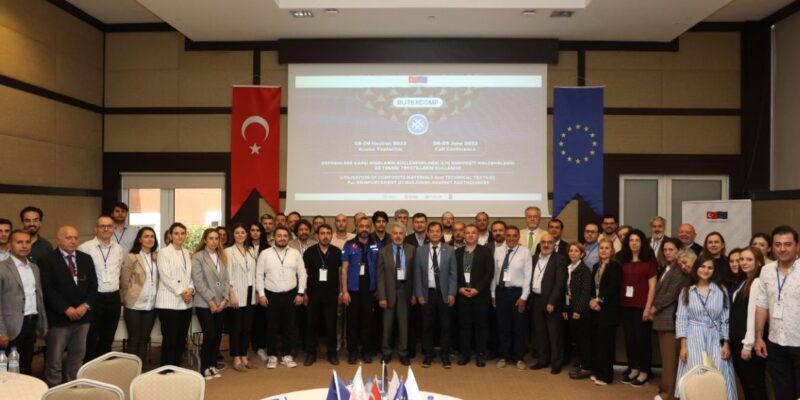
BUTEXCOMP, one of Turkey’s most important technological transformation projects in composite materials and technical textiles, supported by the European Union (EU) and the Republic of Turkey and carried out by Bursa Chamber of Commerce and Industry (BTSO), held a Search Meeting titled ‘Use of Composite Materials and Technical Textiles for Strengthening Buildings Against Earthquakes’ in Istanbul.

The Composite Material and Technical Textile Prototype Production and Application Center (BUTEXCOMP) Technical Assistance Project carried out by BTSO is implemented within the scope of the Competitive Sectors Program, which is financed within the framework of the financial cooperation between the European Union and the Republic of Turkey and carried out by the Ministry of Industry and Technology.

Turkey's Most Important Scientists and Japanese Earthquake Expert Moriwaki Also Attended

In the meeting, which continued for 2 days with the participation of academicians who are experts in their fields as well as representatives of relevant government agencies, universities, non-governmental organizations, research centers and the private sector, after the ‘situation analysis’, the necessary actions to be taken to prepare a draft road map and action plan for increasing the use of composites and technical textiles for earthquake-resistant structures were revealed through parallel group work.

On the first day of the program, world-renowned Japanese Earthquake Expert Yoshinori Moriwaki made a presentation on the studies carried out on the strengthening of buildings, while Yuko Tanaka, Head of the Turkey Office of the Japanese International Cooperation Agency JICA, explained the studies carried out by JICA after the February 6 earthquakes. Dr. Heike Illing-Günther, Director of the Saxon Textile Research Institute, who attended the meeting online from Germany, shared the results of the project titled ‘Textiles for the Building Sector – Examples of Reinforcing Materials/Research’. In the event, Prof. Dr. Güney Özcebe, Retired Faculty Member of METU Civil Engineering Department and Advisor to the Rector of TED University, made a presentation titled ‘Is Structural Retrofitting a Solution?’, Prof. Dr. Haluk Sucuoğlu made a presentation titled ‘Evaluation and Retrofitting of Existing Buildings’ and Prof. Dr. Alper İlki, Faculty Member of Istanbul Technical University Faculty of Civil Engineering and President of Earthquake Foundation, made a presentation titled ‘Kahramanmaraş Earthquakes, Retrofitting the Earthquake Performance of Existing Buildings’.

Important Outputs Achieved

Commenting on the meeting, Alparslan Şenocak, Member of the Board of Directors of BTSO, said, “After the February 6 earthquakes, reinforcement applications, especially with carbon fibers, have come to the agenda again. Our Textile and Technical Textile Center of Excellence and Advanced Composite Materials Research and Excellence Center, which we established within BUTEKOM in Bursa, have an important infrastructure and accumulation that will strengthen the studies in this field. With our BUTEXCOMP project, we aim to prepare a new roadmap to increase the use of composite materials and technical textiles in the construction of new earthquake-resistant buildings and the retrofitting of existing buildings. In this context, I think that our search meeting, which we organized with the participation of sector stakeholders and experts in the field, provided important outputs.”

Report to be Submitted to Relevant Authorities

Prof. Dr. Mehmet Karahan, Director of the BUTEXCOMP Project Operation Coordination Unit, said: “Our aim is to establish a domestic supply chain in Turkey for technical textiles and composite materials used in earthquake retrofitting, and to establish the relevant standards and legislation. We also aim to close the gaps in education in this field and to create areas of cooperation. Within the scope of the workshops, we will continue to discuss issues such as how legislation and standards should be established in this field, who should work on this work, what can be done on the basis of education, for example, opening courses on the subject in the civil engineering department, opening reinforcement-oriented programs in 2-year vocational colleges. A very valuable report will be obtained at the Search Meeting in Istanbul. We will present this report to the relevant authorities with the hope that it will be implemented.”
Technical Textiles and Composites Sectors in Bursa to Join Forces with Clustering

The first strategic step was taken with the 'Cluster Analysis Workshop' for the high value-added technical textile and composite sectors in Bursa to join forces in a unified cluster. Clustering will provide both sectors with an advantage in terms of international competitiveness.

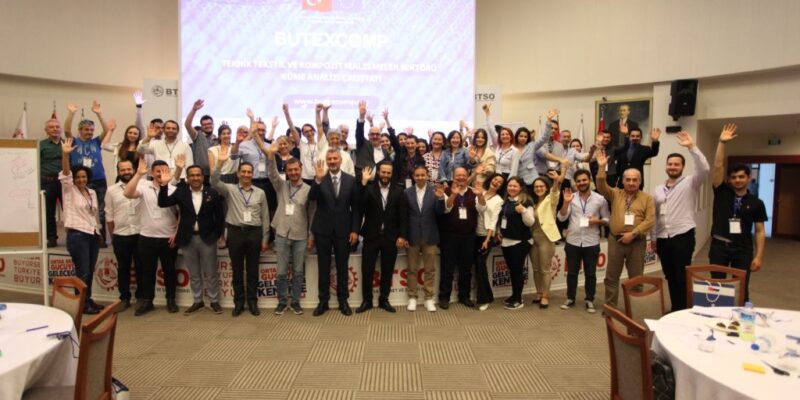
BUTEXCOMP, one of Turkey’s most important technological transformation projects in composite materials and technical textiles, supported by the European Union and the Ministry of Industry and Technology of the Republic of Turkey and carried out by Bursa Chamber of Commerce and Industry, organized another event to increase the competitiveness of the sector. Technical Textile and Composite Materials Sector Cluster Analysis Strategy Meeting was held with the participation of companies and stakeholders in the sector.

The Composite Material and Technical Textile Prototype Production and Application Center (BUTEXCOMP) Technical Assistance Project carried out by Bursa Chamber of Commerce and Industry (BTSO) is carried out within the scope of the Competitive Sectors Program financed by the European Union and the Republic of Turkey within the framework of financial cooperation and carried out by the Ministry of Industry and Technology. In the first part of the ‘Cluster Analysis Strategy Meeting’ held with the participation of sector representatives, the importance of clustering and the ‘Cluster value chain and map’ prepared for the Composite Materials and Technical Textiles Cluster were shared with companies and project stakeholders. In the second part, the participants discussed in groups and shared their opinions.

It will be enabled to open up new markets

BUTEXCOMP, one of Turkey’s most important technological transformation projects in composite materials and technical textiles, supported by the European Union and the Ministry of Industry and Technology of the Republic of Turkey and carried out by Bursa Chamber of Commerce and Industry, organized another event to increase the competitiveness of the sector. Technical Textile and Composite Materials Sector Cluster Analysis Strategy Meeting was held with the participation of companies and stakeholders in the sector.

Murat Kurtlar, General Manager of BUTEKOM, stated that the findings of the Bursa technical textile and composite materials cluster ecosystem value chain and cluster analysis were discussed in interactive sessions at the event and added: “We guide the transformation of the industry and our industrialists, especially digital and green transformation, by focusing on companies and entrepreneurs with high growth potential. The technical textile and composite sectors play a critical role in this transformation. Within the scope of this project; we will provide support to our companies operating in both sectors to develop their products, to enable them to open up to new markets, to ensure that they can get more share in global markets, and to strengthen their innovative capacities.”

BTSO has great experience in clustering

Prof. Dr. Mehmet Karahan, Director of the BUTEXCOMP Project Operation Coordination Unit, said: “We aim to create a unified cluster for technical textiles and composite materials. With the supply chain created in the cluster, companies will complement each other and reach a point where they can compete in international markets and sell good products. Since there is no cluster in this field in Turkey, we deemed this work essential. BTSO, the beneficiary of the project, already has great experience in clustering. In this last event, we exchanged views with the companies on which elements the supply chain will consist of in the cluster. We will hold 4 more workshops.”

Bursa Can Become One of the World's Top Players

Yeliz Çuvalcı, BUTEXCOMP Clustering Expert Yeliz Çuvalcı shared the findings of the cluster analysis and value chain analysis and said: “Together with our companies, representatives of public institutions and organizations and universities, we discussed which steps we will take to compete with the whole world in Bursa in the technical textile and composite sector. We have taken the first step of the strategic road map that we will shape with the opinions of the companies on the basis of analysis, value chain. The technical textile and composite sectors are growing sectors with high added value all over the world. Bursa can become one of the world’s leading players in both sectors with its industrial infrastructure and company strength. For this, it is necessary to clarify which sub-sectors should be focused on and which technological capabilities and processes can be developed. Our job is to clarify this road map for companies.”

Transformation in Technical Textiles and Composites Accelerates with BUTEXCOMP

The results of the first activities of the BUTEXCOMP Project, which was implemented for SMEs in order to increase the competitiveness of the composite material and technical textile sectors in Bursa, were shared with sector representatives.

The Composite Material and Technical Textile Prototype Production and Application Center (BUTEXCOMP) Technical Assistance Project, carried out by the Bursa Chamber of Commerce and Industry (BTSO), is carried out within the scope of the Competitive Sectors Program financed by the European Union and the Republic of Turkey within the framework of financial cooperation and carried out by the Ministry of Industry and Technology. At the ‘Diagnostic Studies and Needs Analysis Consultation and Dissemination Meeting’ held with the participation of sector representatives; market research data and technology trends collected in the light of interviews with 140 companies and needs analysis with 50 companies will be adapted to the needs of SMEs in both sectors.

AIMING FOR A MORE COMPETITIVE ECOSYSTEM

BTSO Board Member Hakan Batmaz stated that BUTEXCOMP aims to create a fully integrated cluster for the two sectors and said, “BUTEXCOMP, which will provide services in titles such as training, R&D, consultancy, partnership building and working together culture in order for the Bursa manufacturing industry to consolidate its place in the rapidly developing technical textile and composite sectors, will provide significant benefits to our companies. It will enable SMEs to become part of a technologically richer, more efficient and more competitive ecosystem.”

'WILL SHAPE THE FUTURE OF SECTORS'

Prof. Dr. Mehmet Karahan, Director of the BUTEXCOMP Project Operation Coordination Unit, stated that the meeting was very important in shaping the future of both sectors and said: “We will use the results of the diagnostic study in the formation of partnership programs of companies in cluster formation, role model and supply chain studies. Especially the supply chain is very important for the correct formation of the cluster. We have obtained extremely useful outputs in the diagnostic study, cluster formation and supply chain formation, in the dimension of the services and trainings we will provide to the companies, as well as in determining the activities of BUTEXCOMP.”

BUTEXCOMP Support for the Transformation of SMEs in Technical Textiles

Within the scope of the activities of BUTEXCOMP, one of the most important technological transformation projects for composite materials and technical textiles, conducted by the leadership of Bursa Chamber of Commerce and Industry (BTSO), an interactive training that will increase the competitiveness of technical textiles was held.

Composite Materials and Technical Textile Prototype Production and Application Center (BUTEXCOMP), which is one of the most important technological transformation projects co-financed within the framework of the financial cooperation of the European Union and the Republic of Türkiye, and conducted by the Bursa Chamber of Commerce and Industry (BTSO), makes a significant contribution to the transformation of the sectors. Within the scope of the project, a 3D/Next Generation Weaving Technologies Training programme was organized, hosted by Bursa Technology Coordination and R&D Center (BUTEKOM).

Virtual Tour Made to the Facilities in Germany

Under the leadership of BTSO, within the scope of the Competitive Sectors Programme carried out by the Ministry of Industry and Technology, a live virtual tour was held to the Germany Lindauer Dornier GmbH factory in the 3D/Next Generation Weaving Technologies Training organized within the BUTEXCOMP project implemented under the roof of BUTEKOM. In addition to the live online presentation on textile technologies and 3D knitted composite jacquard design software for composites, the Tape Weaving Machine Laboratory in BUTEKOM was physically visited.

Companies Met with New Technologies

BUTEKOM Academic Consultant Prof. Dr. Mehmet Karahan stated that they carried out a very useful programme and said, “As part of the technical textile part of our project, we organized a comprehensive training programme on advanced technology production methods used in the production of technical textile and composite material preforms. The operation at the Dornier factory in Germany was directly broadcasted live to our participants. Our participants had the opportunity to see and watch closely the weaving technologies used in 3D weaving, tape weaving and other technical textiles. With this activity, we think that we have completed the lack of knowledge of our companies, especially in the textile sector. We introduced them to new technologies and provided important information to our SMEs in their transformation into technical textiles. During this journey, we expect our SMEs to benefit from trainings and other activities in a more competitive and more technical textile-adapted way.”